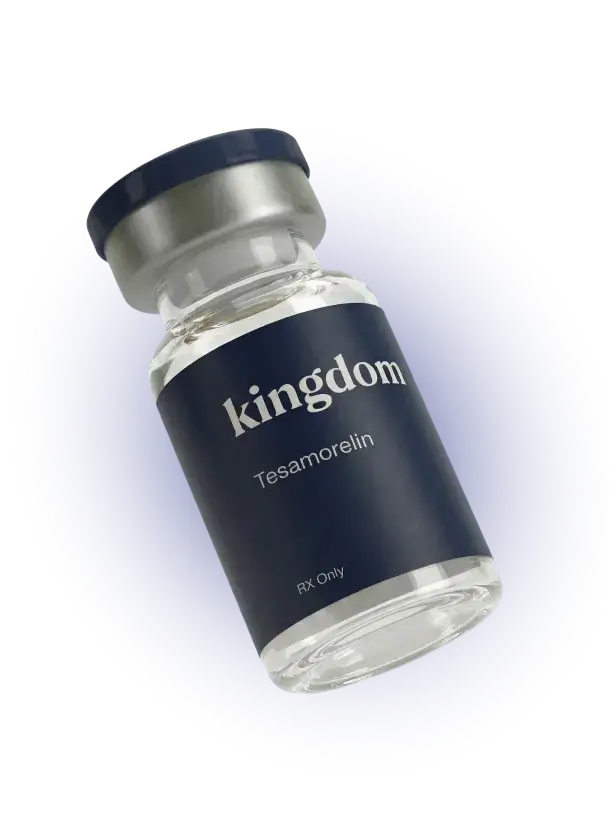
Tesamorelin
/mo
Optimize metabolism. Reduce visceral fat. Restore balance.

Targeted growth hormone stimulation: enhancing metabolic and body composition pathways
Guided by experts
You are never alone in this journey. Every step is overseen by clinical specialists who ensure your protocol is as unique as your biochemistry.
Take our quiz
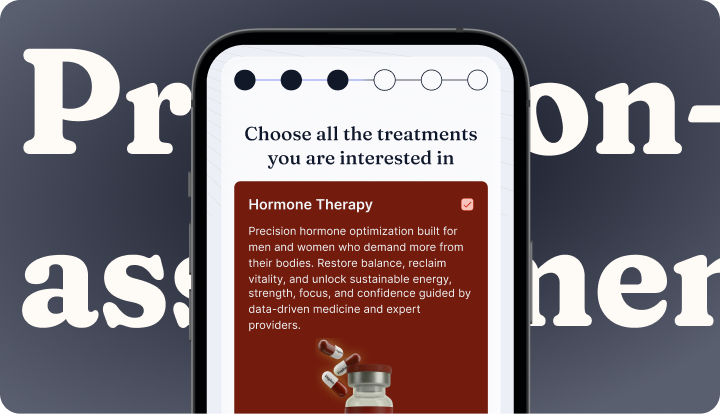
Answer a few quick questions to help us understand your goals and medical history.
Meet your provider

Meet with a specialized clinician who reviews your data and designs a strategy tailored to you.
Begin your journey

Receive your custom protocol at your doorstep with continuous clinical oversight to ensure your long-term success.
Health is a Kingdom


For every question, an expert answer.
If your question isn't here, don't worry, Ask our experts for clarity on your journey. We’re here to help.
Can I use HSA or FSA funds for peptide therapy?
Yes. Kingdom accepts HSA and FSA payments, and many patients use these accounts to pay for consultations, lab work, and treatment.
Can peptide therapy be combined with other Kingdom treatments?
Yes. Peptide therapies are often combined with hormone therapy, weight loss treatments, or wellness therapies when clinically appropriate.
Does Kingdom accept insurance for peptide therapy?
Kingdom does not accept insurance for peptide therapies. Insurance coverage for these treatments is limited, and operating outside of insurance allows for individualized care.
Do I need lab work before starting peptide therapy?
Most peptides do not require lab work to start therapy. However, some peptides require follow up lab testing 3 months after starting treatment.
How does the lab process work?
If labs are required, Kingdom orders the lab work and sends the lab order to you via email. You will schedule or walk in for a blood draw at a local LabCorp location. Lab costs are paid to Kingdom as part of your care, and results are shared securely with both you and your provider.
How long does it take to notice results?
Response timelines vary by individual and by peptide. Some patients notice changes within weeks, while others experience more gradual improvements over time. Outcomes depend on consistency, physiology, and treatment goals.
How are peptide therapies administered?
Most peptides do not require lab work to start therapy. However, some peptides require follow up lab testing 3 months after starting treatment. Your provider will determine the appropriate protocol and provide guidance based on the specific therapy prescribed.
Are peptide therapies safe?
When prescribed for appropriate patients and monitored by licensed medical providers, peptide therapies can be safe and well tolerated. Kingdom providers assess medical history and goals before initiating therapy and continue monitoring throughout care.
What types of peptide therapies does Kingdom offer?
Depending on individual evaluation, Kingdom providers may prescribe peptides that support growth hormone signaling, mitochondrial function, tissue repair, recovery, or cellular optimization. Specific therapies are selected based on goals, labs when required, and clinical appropriateness.
Are peptides hormones or steroids?
No. Peptides are not steroids and do not replace hormones. They support and enhance the body’s existing signaling pathways rather than overriding or suppressing natural hormone production.
Who are Kingdom’s peptide therapies meant for?
Kingdom’s peptide therapies may be appropriate for individuals seeking support for recovery, metabolic efficiency, cellular health, body composition, or overall performance. Providers evaluate each patient individually to determine whether peptide therapy is clinically appropriate.
What are peptides?
Peptides are short chains of amino acids that act as signaling molecules in the body. They help regulate natural biological processes such as growth hormone signaling, tissue repair, metabolic function, and cellular recovery.