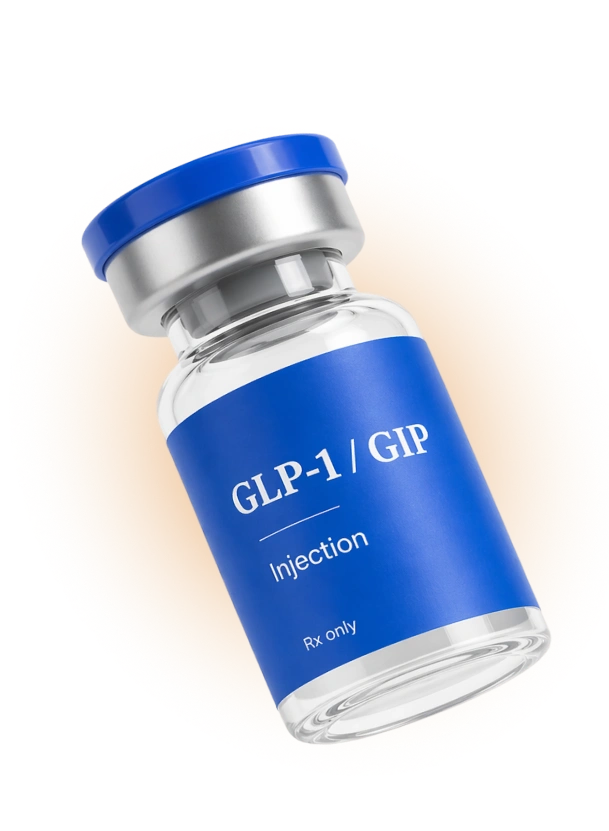
Compounded GLP-1 / GIP
/mo
It’s not just about willpower.

Regulating appetite through dual hormone signaling.
Guided by experts
Your treatment is not built from a template. Kingdom providers use lab work, health history, and ongoing check-ins to shape a protocol tailored to how your body responds over time.
Take our quiz

Answer a few quick questions to help us understand your goals and medical history.
Meet your provider

Meet with a specialized clinician who reviews your data and designs a strategy tailored to you.
Begin your journey

Receive your custom protocol at your doorstep with continuous clinical oversight to ensure your long-term success.
Health is a Kingdom


For every question, an expert answer.
If your question isn't here, don't worry, Ask our experts for clarity on your journey. We’re here to help.
How do GLP-1 and GIP work together?
GLP-1 and GIP are incretin hormones that act on complementary metabolic pathways. GLP-1 primarily influences satiety and gastric emptying, while GIP plays a role in insulin signaling and nutrient utilization.
Does GLP-1/GIP therapy affect digestion?
GLP-1 slows gastric emptying, which can extend satiety, while GIP influences how nutrients are processed after absorption.
What makes dual-pathway therapy different from GLP-1 alone?
Targeting both GLP-1 and GIP receptors engages multiple pathways involved in appetite regulation, glucose metabolism, and energy use.
How does GLP-1/GIP affect insulin response?
Both hormones enhance glucose-dependent insulin secretion, meaning insulin release is tied to food intake rather than occurring independently.
Who is typically considered for GLP-1/GIP therapy?
It is often discussed when appetite regulation, metabolic response, energy balance, or weight management remain challenging despite consistent lifestyle efforts.
Why can cravings feel more constant over time?
Changes in metabolic signaling, stress, hormonal fluctuations, aging, and lifestyle factors can all influence hunger cues and reward-driven eating behaviors.
Why is clinical supervision important with dual incretin therapy?
Because these therapies influence multiple metabolic systems, monitoring helps align treatment with individual response, tolerability, and overall health goals.
How is therapy adjusted over time?
Dosing and protocol decisions are based on clinical response, tolerability, appetite changes, and metabolic markers, with ongoing monitoring built into the process.