
Testo + Progesterone + Estrogen
/mo
Get your body back on your side.

Estrogen, progesterone, and testosterone all work together.
Guided by experts
Your treatment is not built from a template. Kingdom providers use lab work, health history, and ongoing check-ins to shape a protocol tailored to how your body responds over time.
Take our quiz
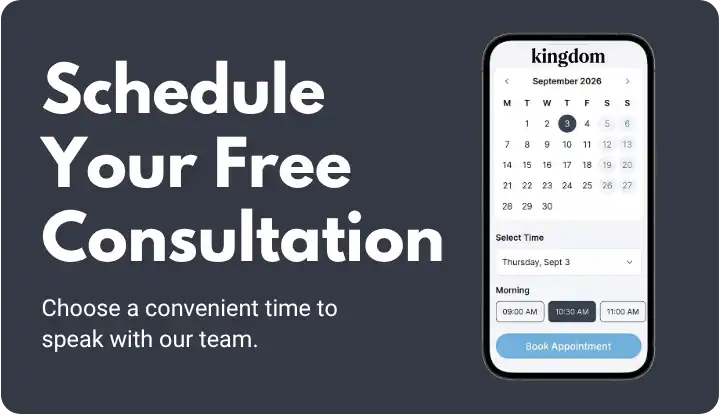
Answer a few quick questions to help us understand your goals and medical history.
Meet your provider

Meet with a specialized clinician who reviews your data and designs a strategy tailored to you.
Begin your journey

Receive your custom protocol at your doorstep with continuous clinical oversight to ensure your long-term success.
Health is a Kingdom

For every question, an expert answer.
If your question isn't here, don't worry, Ask our experts for clarity on your journey. We’re here to help.
Why is a multi-hormone approach used instead of treating one hormone?
Symptoms during menopause often result from shifts across multiple hormone pathways. Focusing on one hormone alone may not address the full pattern of symptoms.
How does estrogen relate to hot flashes and night sweats?
Estrogen influences the hypothalamus, which regulates body temperature. Declining levels can narrow the thermoneutral zone, making the body more sensitive to small temperature changes.
Why are estrogen, progesterone, and testosterone used together?
These hormones regulate interconnected systems including thermoregulation, mood, sleep, and metabolic function. Addressing them together helps reflect how hormonal signaling actually works during perimenopause and menopause.
How is combination hormone therapy monitored?
Treatment is guided by lab markers, symptom patterns, and life stage, with adjustments made over time to maintain balance across hormone systems.
How does testosterone affect women during menopause?
Testosterone contributes to libido, energy, and cognitive function. Even modest declines can influence motivation, mental clarity, and sexual health.
What role does progesterone play in menopause symptoms?
Progesterone interacts with GABA receptors involved in relaxation and sleep regulation. Changes in progesterone levels can affect sleep quality and stress response.