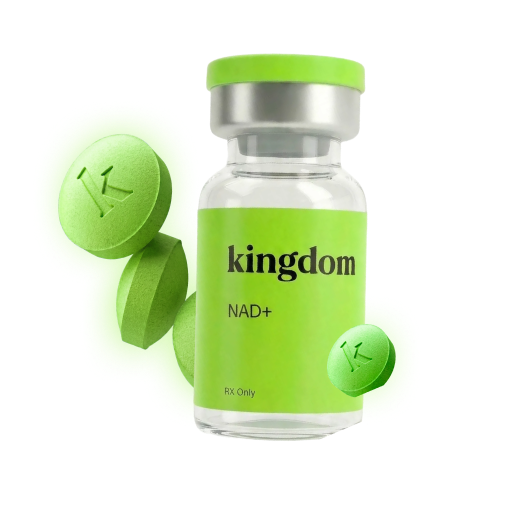
Follicle Stimulating Hormone (FSH)
Who is it for?

Strong fertility starts with strong signaling.

If you are thinking about starting a family, trying to improve fertility, or looking into reproductive health after hormone disruption, FSH therapy may be worth discussing with a provider. Some fertility issues are tied to weak hormone signaling between the brain and the testes, not permanent testicular damage. FSH helps support the pathways involved in sperm production and reproductive function.
Muscular man in a beige hoodie posing confidently against a red gradient background with text 'Your peak performance, secured.'
Benefits
The pillars of your transformation
Support sperm production at the source
FSH plays a direct role in the process of sperm development.
Keep fertility part of the plan
Often used in fertility-focused treatment strategies for men.
Support reproductive signaling
Helps stimulate the hormone pathways tied to sperm maturation.
Built around your fertility goals
Protocols are adjusted based on lab work, reproductive markers, and treatment response.
The Science

Supporting sperm production through reproductive hormone signaling.

FSH is a naturally occurring hormone produced by the pituitary gland. It works by stimulating Sertoli cells inside the testes, which are involved in sperm production and maturation. Unlike therapies focused mainly on testosterone levels, FSH directly targets the pathways tied to spermatogenesis, the process of producing sperm. In some treatment plans, FSH is used alongside HCG therapy. HCG helps support testosterone production, while FSH supports sperm development and maturation. At Kingdom, providers use hormone panels, fertility testing, and ongoing monitoring to determine whether FSH therapy fits into a patient’s reproductive health strategy and adjust treatment over time based on response.
The Clinical Journey

Guided by experts

Your treatment is not built from a template. Kingdom providers use lab work, health history, and ongoing check-ins to shape a protocol tailored to how your body responds over time.

01
02
03

Take our quiz

Mobile screen showing a hormone therapy treatment option with description and a progress bar indicating several steps in a selection process.

Answer a few quick questions to help us understand your goals and medical history.

Meet your provider

Person having a video consultation with a doctor on a laptop showing a smiling male doctor in a white coat.

Meet with a specialized clinician who reviews your data and designs a strategy tailored to you.

Begin your journey

Man in black shirt lifting and playing with a smiling woman in brown overalls outdoors on a sunny day.

Receive your custom protocol at your doorstep with continuous clinical oversight to ensure your long-term success.

Explore More

Health is a Kingdom

Your optimization might go further. Discover how our other protocols can complement your wellness journey.
FAQS

For every question, an expert answer.

If your question isn't here, don't worry, Ask our experts for clarity on your journey. We’re here to help.

Can I use HSA or FSA funds?

Yes. Kingdom accepts both HSA and FSA payments, and many patients choose to use these accounts to pay for consultations, lab work, and ongoing care.

Does Kingdom accept insurance for hormone therapy?

Kingdom does not accept insurance for hormone optimization services. Insurance models are designed around standardized, population-based care, while hormone therapy requires individualized evaluation and ongoing optimization.

Do I need lab work before starting hormone therapy?

Yes. Lab testing is required before beginning hormone therapy to evaluate baseline hormone levels and ensure treatment is appropriate and safe.

How does the lab process work?

After your consultation, Kingdom orders your lab work and sends the lab order to you via email. You will use this order to schedule or walk in for a blood draw at a local LabCorp location. The cost of the lab work is paid to Kingdom as part of your care. Once completed, results are securely shared with both you and your Kingdom provider for review and discussion.

Is hormone therapy safe?

When prescribed for appropriate patients and monitored by a licensed medical provider, hormone therapy can be safe and effective. The FDA continues to regulate and oversee FDA-approved hormone therapies and has recently updated guidance and labeling to better reflect current scientific evidence surrounding hormone health. At Kingdom, safety is built into the care model through baseline laboratory testing, individualized treatment planning, and ongoing monitoring. Therapy is adjusted over time based on both lab values and clinical response.

How does hormone therapy affect fertility?

Certain hormone therapies, particularly testosterone-based treatments, can impact natural hormone signaling related to fertility. Kingdom providers discuss fertility goals during the consultation process and may recommend supportive therapies or alternative treatment strategies when fertility preservation is a priority. All treatment plans are individualized to align with both health and family-planning goals.

Do hormone levels really vary that much between people?

Yes. Hormones are highly individual. Two people with identical lab values may experience very different symptoms. Kingdom providers consider both laboratory data and clinical presentation when designing personalized treatment plans.

Who is hormone therapy meant for?

Hormone therapy may be appropriate for individuals experiencing symptoms such as fatigue, low energy, mood changes, reduced libido, brain fog, or difficulty maintaining muscle mass or metabolic health. Kingdom providers evaluate each patient individually using laboratory testing and clinical assessment to determine whether hormone therapy is appropriate.

Is hormone therapy only for men?

No. Hormone therapy is used for both men and women. While testosterone plays an important role for both sexes, supporting hormones such as estradiol and progesterone may also be addressed when clinically indicated based on symptoms, labs, and life stage.

How is hormone therapy different from traditional healthcare?

Traditional healthcare often focuses on diagnosing and treating disease once it occurs. Kingdom’s approach emphasizes optimization—addressing symptoms, balance, and long-term health rather than relying solely on population-based reference ranges or minimum thresholds.