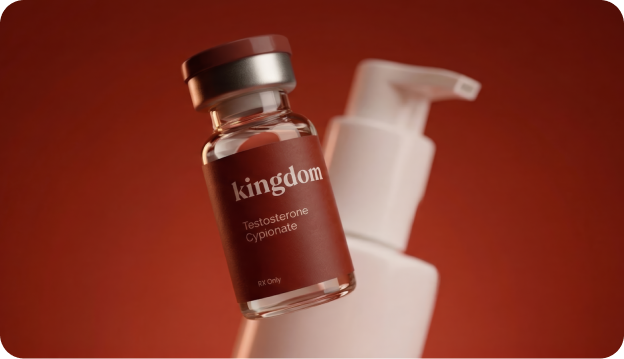
Testosterone Replacement Therapy (TRT) is used to restore hormone levels in men experiencing symptoms such as low energy, reduced libido, decreased muscle mass, and mood changes.
One of the most important decisions in TRT is how testosterone is delivered.
Here we will cover the core differences between:
- Intramuscular (IM) injections (weekly “depot” dosing)
- Transdermal gels (daily “steady-state” dosing)
While both methods aim to raise testosterone levels into a normal range, they behave differently in the body. That difference comes down to pharmacokinetics, aka how testosterone is absorbed and released over time.
- Injections deliver a larger dose at once, leading to peaks and a gradual decline
- Gels deliver smaller daily doses, maintaining more stable levels
Why the Delivery Method Matters in TRT
Testosterone isn’t just about energy or libido; it plays a role in several core functions in the body, including:
- Bone density (helping maintain bone strength over time)
- Fat distribution (where and how your body stores fat)
- Muscle strength and maintenance
- Red blood cell production, which affects oxygen delivery and endurance
Because testosterone influences multiple systems, the consistency of your hormone levels matters just as much as the level itself, because your body is used to producing testosterone in a daily rhythm: levels typically rise in the morning and decline throughout the day.
When you start TRT, that natural rhythm is replaced by whatever pattern your treatment creates. This is where the delivery method becomes important.
Injections vs. gels
From a medical standpoint, the difference comes down to how testosterone enters and moves through your bloodstream over time.
- Injections (bolus dosing)
With injections, a larger dose of testosterone is delivered at once. After administration levels rise relatively quickly, reach a peak within the first few days, then gradually decline until the next dose. This creates a fluctuating pattern, often referred to as a peak and trough. Some patients notice: higher energy shortly after injection and a gradual drop in energy or focus as levels decline.
- Gels (steady-state dosing)
Gels work differently. Instead of one large dose, you apply a smaller amount every day, which is absorbed through the skin. With consistent use, testosterone enters the bloodstream gradually, levels stay within a narrower, more stable range, and day-to-day fluctuations are typically smaller. This approach is often described as “steady-state” because hormone levels remain more consistent over time.
Why does this affect how you feel? Even if your average testosterone level is the same, how stable it is can change how you feel. Some people do well with the higher peaks from injections, others prefer the consistency of daily gel application. This is why patients sometimes report feeling different on Day 2 vs. Day 7 of an injection cycle.
Testosterone Injections: Pros and Cons
TRT injections deliver testosterone directly into the body using a needle (typically into muscle: glutes, quads, or delts, or sometimes into subcutaneous fat). The testosterone is attached to an ester (such as cypionate or enanthate), which controls how slowly it’s released into the bloodstream after injection. Once administered, the hormone is absorbed and gradually becomes active in the body over the following days.
Why some patients prefer injections
- High bioavailability: with injections, nearly 100% of the dose reaches circulation. There’s no loss through the skin or variability in absorption, which makes it one of the most reliable delivery methods. This is why injections are often used as a baseline reference in clinical research on testosterone therapy.
- Cost-effective: in the U.S., injectable testosterone (especially generic cypionate) is typically the most affordable long-term option, particularly for patients paying out of pocket.
- Less frequent dosing: most protocols involve one injection per week. While traditional approaches sometimes even use dosing every two weeks, that often leads to noticeable peaks and crashes because testosterone’s half-life is around 7 days. More optimized protocols (like those used at Kingdom) use twice-weekly dosing to help maintain steadier levels, reduce fluctuations, and support a more consistent overall experience.
- Predictable response: because absorption is consistent, clinicians can more easily adjust dosing based on lab results, helping fine-tune testosterone levels over time.
Potential downsides to consider:
- Fluctuating levels (“peak and trough”): after an injection, testosterone levels rise and then gradually decline before the next dose. Some people notice higher energy earlier in the week, lower energy or focus toward the end. This pattern is well documented and varies depending on dose and frequency.
- Needle requirement: injections require either self-administration or regular clinic visits. While many patients adapt quickly, it can be a barrier for those uncomfortable with needles.
- Injection site reactions: some individuals experience temporary soreness, swelling, or irritation at the injection site. This is often mild but can occur, especially with improper technique.
When injections may not be ideal
Injections may require closer monitoring for individuals with:
- elevated hematocrit (thicker blood)
- sensitivity to hormonal fluctuations
Topical Testosterone Gel: Pros and Cons
Testosterone gel is a clear, fast-drying topical formulation applied directly to the skin, usually on the shoulders, upper arms, or abdomen.
After application, testosterone is absorbed through the skin and enters the bloodstream gradually over several hours. Because it’s applied daily, it’s designed to maintain more consistent hormone levels rather than creating peaks and drops.
Why some patients prefer gels
- More stable hormone levels: with daily application, testosterone levels tend to stay within a narrower, more consistent range. This approach more closely reflects the body’s natural rhythm and avoids the sharp rise and fall seen with injections.
- Non-invasive: no needles, no injections, and no need for in-office visits. For many people, this is the biggest advantage.
- Simple to integrate into routine: application is straightforward and can be built into a morning routine, similar to brushing your teeth or getting ready for the day.
Potential downsides to consider
- Risk of transfer: if the gel is not fully absorbed, testosterone can transfer through skin contact to: partners, children, and pets. This is a well-documented risk and the reason topical testosterone carries a Black Box warning. Proper precautions, like washing hands and covering the application site, are essential.
- Variable absorption: unlike injections, absorption through the skin is not always consistent. It can be affected by: sweating, showering or swimming, skin thickness and condition, etc. This means some individuals may not reach or maintain optimal levels as easily.
- Daily commitment: gels must be applied every day at roughly the same time. Missing doses or inconsistent use can lead to fluctuations in hormone levels.
- Skin irritation: because gels use an alcohol-based carrier, some people experience dryness, irritation, or sensitivity at the application site.
Absorption and Hormonal Stability: What Science Says
One of the main differences between injections and gels is how testosterone levels rise and fall in the bloodstream over time.
With injections:
- Testosterone levels increase after administration
- Reach a higher peak early in the cycle
- Then gradually decline until the next dose
In some cases, these peaks can be supraphysiological (above the normal range) before returning to baseline.
With gels:
- Testosterone is absorbed in smaller, daily amounts
- Levels stay within a narrower, more stable range
- Large fluctuations are less common with consistent use
Timing considerations
- Gels: gels are typically applied in the morning to align with the body’s natural circadian rhythm, when testosterone levels are normally highest.
- Injections: timing during the day is less critical, but consistency matters. Most protocols are structured around a fixed day each week, which helps maintain stable averages and makes bloodwork easier to interpret.
DHT conversion
Because gels are absorbed through the skin, they interact with enzymes such as 5-alpha reductase. This can lead to increased conversion of testosterone into DHT (dihydrotestosterone) compared to injections. For some individuals, this may be relevant in the context of hair loss and prostate-related considerations
Use Cases: Finding Your Fit (GEO & AEO Focus)
But this decision isn’t just about what works on paper. It’s about what actually fits into your day-to-day life. The right TRT method depends just as much on your routine, environment, and priorities as it does on your lab results.
For example, someone focused on training and body composition may lean toward injections. Because they create higher peak levels, some individuals feel a stronger effect during certain parts of the dosing cycle, which can align with performance-focused goals.
On the other hand, for a busy professional, gels can be easier to manage. Application takes only a few minutes and can be built into a morning routine without needing to think about injections, supplies, or scheduling.
Lifestyle also matters when it comes to the household environment. For men with partners or young children, injections are often the safer option, as they eliminate the risk of accidental transfer that can occur with topical gels.
Travel is another practical factor. Injections tend to be more convenient for longer trips, since a single dose can cover multiple days. Gels require daily application and carrying bottles or packets, which can be less practical when moving through airports or dealing with luggage restrictions.
Cost Comparison & Insurance Accessibility
Cost is often one of the deciding factors when choosing between injections and gel, and in most cases, the difference is noticeable.
Injections, particularly generic testosterone cypionate, tend to be the more affordable option. They’ve been around longer, are widely available, and are typically priced lower both with and without insurance.
Gels, on the other hand, are often brand-name formulations, which makes them more expensive on a monthly basis. As with most aspects of TRT, access and cost can vary depending on location, insurance plan, and whether care is provided through a traditional clinic or a telehealth platform. Today, access to TRT has expanded significantly with telehealth, especially in larger states like Florida, Texas, and California. Patients in these areas often have more options for remote consultations, lab coordination, and ongoing management without needing frequent in-person visits.
How to Choose the Right Method (AEO)
At this point, the question isn’t which method is “better.” It’s which one you’re more likely to stick with consistently, because consistency is what ultimately determines how well TRT works.
For most people, the decision comes down to a few key factors:
- Start with your comfort level: if you’re not comfortable with injections or don’t want to self-administer, gels are usually the more realistic option. If needles aren’t an issue, injections tend to offer more flexibility and lower cost.
- Look at your daily routine: gels require daily application at roughly the same time. If your schedule is structured and predictable, that can work well. If not, missed applications can affect consistency. Injections, on the other hand, are done less frequently, but still require you to stay on a regular weekly schedule.
- Consider how your body responds: some individuals are more sensitive to fluctuations in hormone levels. If you notice mood or energy dips toward the end of an injection cycle, a more stable daily method may be worth considering If stable levels aren’t an issue, injections are often simpler to manage
- Factor in your environment: This is often overlooked, but important. If you have young children or a partner at home, injections eliminate the risk of accidental transfer. If that’s not a concern, gels remain a viable option.
- Think long-term, not short-term: TRT is not a one-time decision; it’s an ongoing process. What matters most is: regular bloodwork, proper dose adjustments, and how you actually feel over time. The method you start with isn’t necessarily the one you’ll stay on.
In the end, the right choice is the one that fits your lifestyle, preferences, and physiology and can be adjusted as your body responds.
Dosage Guidelines & Best Practices
RT dosing isn’t one-size-fits-all.
While there are general starting ranges, the right dose depends on your lab results, symptoms, and how your body responds over time. That’s why ongoing monitoring and adjustments are part of the process.
Typical dosing ranges
Most protocols start within a standard range and are then adjusted as needed:
- Injections: typically around 100mg–200mg per week
- Gels: usually 50mg–100mg daily (depending on formulation, often 1%–2%)
Why bloodwork matters
Lab testing is what guides everything.
Without it, there’s no reliable way to know whether your levels are too low, too high, or properly balanced.
Most protocols include testing every 3–6 months, looking at markers such as:
- Total testosterone
- Free testosterone
- Estradiol (E2)
- Hematocrit
These values help determine whether adjustments are needed and ensure treatment stays within a safe and effective range.
Best practices for gel application
If you’re using a topical gel, how you apply it matters.
- Apply to clean, dry skin
- Allow at least 2–5 minutes before dressing
- Wash your hands immediately after application
Consistent use and proper application help ensure more reliable absorption.
Frequently Asked Questions (FAQs)
- Is the gel as effective as the shot? Yes, for raising T levels to the normal range, though many men "feel" the effects of injections more intensely.
- Can I switch from gel to injections? Yes, transitions are common and usually require a 7-day washout period.
- Will the gel rub off on my wife? Yes, if skin-to-skin contact occurs before the gel is fully dried and washed.
- Are injections painful? Modern 25g–27g needles make the process relatively painless, similar to a quick pinch.
Conclusion
There isn’t one “best” option when it comes to TRT. It really comes down to what fits your life and how your body responds.
Some people prefer injections because they’re straightforward, more affordable, and easier to manage week to week. Others prefer gels because they feel more consistent day to day and don’t involve needles.
Both approaches are used every day and can work well when they’re managed properly.
What matters more than the method itself is how the treatment is handled over time. Getting the right labs, adjusting the dose when needed, and paying attention to how you actually feel will have a bigger impact than whether you choose injections or gel.
If you’re not sure which direction makes sense for you, the next step is to get a clear picture of where your levels are and what your goals look like. From there, you can decide on an approach that actually fits; not just in theory, but in real life.
If you’re ready to take that next step, you can schedule a consultation with our U.S.-based hormone specialists to determine your levels and choose the right TRT protocol today.