Key Takeaways
- Most TRT side effects are mild and manageable with proper dosing, monitoring, and protocol adjustments.
- Common side effects include injection site reactions, mild acne, elevated hematocrit, and testicular atrophy.
- Serious side effects like blood clots, heart attack, or stroke are uncommon in properly screened and monitored patients.
- The 2023 TRAVERSE study found TRT did not increase major cardiovascular events in men with existing heart risk factors.
- Many side effects (fertility suppression, testicular atrophy) can be prevented by adding HCG to your protocol.
Regular lab monitoring catches most issues before they become significant problems.
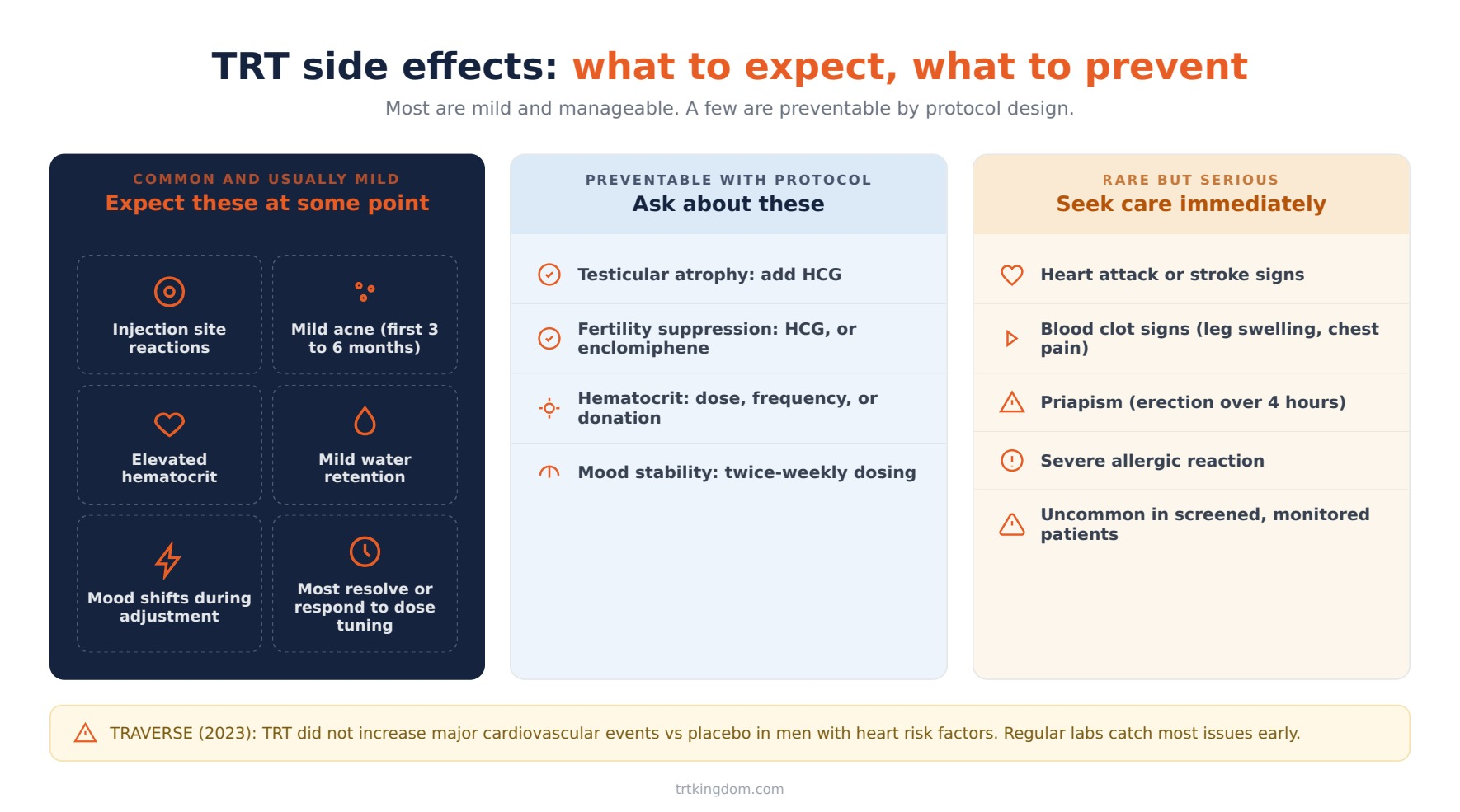
TRT side effects range from mild and manageable to rare but serious. The most common include injection site reactions, mild acne, elevated red blood cell count (hematocrit), water retention, testicular atrophy, and fertility suppression. Serious side effects, including cardiovascular events, blood clots, or significant mood changes, are uncommon in properly screened and monitored patients. The 2023 TRAVERSE study, published in the New England Journal of Medicine, found that TRT did not increase major adverse cardiovascular events in men with existing cardiovascular risk factors, addressing a long-standing safety concern.
Understanding TRT Side Effects Honestly
Every medication has potential side effects. TRT is no exception. The honest conversation is more nuanced than either extreme: it's not the dismissive view that TRT is completely safe, and it's not the alarmist view that it's dangerous.
Most men on properly supervised TRT experience either no significant side effects or mild ones that respond to protocol adjustments. Serious adverse events are uncommon when patients are properly screened before treatment, monitored during therapy, and working with physicians who understand modern protocols.
This guide covers what men actually experience, which side effects are dose-dependent, which can be prevented, and when to call your provider. For comprehensive information on how TRT works and what to expect clinically, see our complete testosterone cypionate guide.
Common TRT Side Effects
These occur often enough that most men on TRT experience at least some of them at some point. Most are mild and respond to simple management strategies.
- Injection site reactions. Soreness, redness, or mild swelling at the injection site is common, especially in the first few months. It usually resolves as you adjust technique. Rotating injection sites, using proper needle technique, and letting the medication reach room temperature before injecting all help.
- Acne. Increased sebum production can lead to mild to moderate acne, particularly on the back, chest, and shoulders. It's most common during the first 3 to 6 months as hormone levels stabilize, and men genetically predisposed to acne are more affected. Skincare adjustments and, occasionally, dose reduction help.
- Elevated hematocrit. Testosterone stimulates red blood cell production, which can raise hematocrit (the percentage of red blood cells in your blood). Mild elevations are common. Significant elevations can increase blood viscosity and potentially cardiovascular risk, so regular monitoring catches this early. Management includes blood donation, dose reduction, or more frequent smaller injections, depending on severity.
- Testicular atrophy. Exogenous testosterone suppresses the brain's production of LH and FSH, the signals that tell the testes to produce testosterone naturally. Without those signals, the testes reduce production and typically shrink. This is one of the most consistently reported concerns among TRT patients.
- It's also preventable. HCG as a testosterone protocol adjunct mimics LH and keeps the testes active even while exogenous testosterone suppresses natural signaling. Modern protocols often include HCG specifically to prevent this side effect.
- Fertility suppression. The same LH and FSH suppression that causes testicular atrophy also reduces sperm production. Men on testosterone-only TRT typically see significant drops in sperm count within 3 to 6 months, sometimes becoming azoospermic (no measurable sperm). This is reversible in most cases after stopping TRT, but recovery can take months and isn't guaranteed for every man. For men who want to preserve fertility, adding HCG to the protocol typically maintains spermatogenesis. Men who want to avoid injectable testosterone entirely may consider enclomiphene as an alternative that preserves fertility.
- Water retention. Mild water retention is common during the first few weeks as hormone levels change. It typically resolves within 4 to 6 weeks. Significant persistent water retention may indicate elevated estradiol and warrants evaluation.
- Increased body hair. Some men notice more hair growth on the body, chest, back, or face. This is generally a cosmetic rather than medical concern and reflects normal androgenic effects. The extent varies with genetic sensitivity to androgens.
- Mood changes. Most men report improved mood on TRT. Some, however, experience mood shifts during the adjustment period, including irritability or heightened emotional responses. Significant mood changes warrant provider evaluation for possible dose adjustment.
Less Common TRT Side Effects
These occur in a smaller percentage of patients but are worth understanding.
- Gynecomastia. Breast tissue growth can occur when testosterone converts to estradiol at high rates through aromatization. Mild tissue sensitivity is more common than actual growth. Elevated estradiol typically precedes gynecomastia and can be caught through regular monitoring. Management includes dose adjustment, careful aromatase inhibitor use when clinically indicated, or lifestyle modifications.
- Male pattern hair loss. TRT may accelerate male pattern baldness in men genetically predisposed to it. DHT, which testosterone converts to via 5-alpha-reductase, is the primary driver. Men without a genetic predisposition typically don't experience accelerated hair loss on TRT.
- Sleep disturbances. Some men report changes in sleep patterns during the first weeks. This usually resolves as hormones stabilize. TRT can worsen untreated sleep apnea, which is why sleep apnea screening belongs in baseline evaluation.
- Elevated blood pressure. Modest increases are possible, particularly with elevated hematocrit or significant water retention. Blood pressure monitoring is standard in TRT follow-up, and men with pre-existing hypertension need careful management.
- Prostate changes. Current evidence does not show that TRT causes prostate cancer, but it can accelerate growth of existing prostate cancer. Appropriate PSA monitoring before and during therapy helps identify concerning changes. Men with a history of prostate cancer require specialized evaluation before considering TRT.
- Headaches. Mild headaches during the first few weeks are not uncommon as hormone levels shift. Persistent or severe headaches warrant provider evaluation.
- Hot and cold flashes. Some men experience temperature regulation changes early in therapy. These typically resolve within the first few months.
Serious TRT Side Effects: Seek Immediate Medical Care
These are uncommon but important to recognize for prompt evaluation:
- Signs of heart attack (chest pain, pain in left arm or jaw, difficulty breathing, cold sweats)
- Signs of stroke (facial drooping, sudden weakness on one side, slurred speech, vision changes)
- Blood clots (leg swelling with pain, sudden shortness of breath, chest pain)
- An erection lasting more than 4 hours (priapism, a medical emergency)
- Severe abdominal pain or yellowing of skin or eyes
- Severe allergic reaction (difficulty breathing, swelling of face or throat)
What the TRAVERSE Study Told Us About Cardiovascular Safety
For over a decade, men considering TRT faced uncertainty about cardiovascular safety. Early observational studies from 2010 to 2015 suggested potential risks, which led to FDA warnings and widespread concern. The 2023 TRAVERSE trial finally provided definitive evidence.
What the study did. TRAVERSE followed 5,246 men with hypogonadism and either existing cardiovascular disease or high cardiovascular risk, with an average follow-up of about 22 months and some followed over 4 years. Participants were randomized to testosterone gel or placebo, specifically to detect cardiovascular safety signals if they existed.
What the study found:
- TRT did not increase major adverse cardiovascular events (heart attack, stroke, cardiovascular death) compared with placebo
- Slight increases in atrial fibrillation were observed
- Slight increases in pulmonary embolism were observed
- Slight increases in acute kidney injury were observed
What this means clinically. For men who have been avoiding TRT because of cardiovascular fears, the best available evidence now shows that properly supervised TRT does not increase heart attack, stroke, or cardiovascular death risk. The secondary findings inform monitoring protocols but don't change the overall safety picture for appropriate patients. Note that TRAVERSE used testosterone gel, so results may not translate identically to injectable forms.
Side Effects by TRT Delivery Method
Different delivery methods have somewhat different side effect profiles.
- Injectable testosterone (cypionate, enanthate): the most common modern TRT. Side effects include injection site reactions and possible peak-and-trough mood fluctuations with less frequent dosing. Weekly or twice-weekly dosing typically produces more stable effects than every-two-weeks protocols.
- Testosterone gel: avoids injections but carries transfer risk (medication can transfer to partners or children through skin contact), absorption variability, and higher rates of conversion to estradiol in some patients. Skin reactions at application sites are common.
- Testosterone pellets: release testosterone over 3 to 6 months. Side effects include possible pellet extrusion, infection at insertion sites, and inability to adjust the dose once pellets are implanted. The overall profile is similar to injectable TRT.
- Oral testosterone: newer oral formulations exist but are less commonly used. Older oral formulations carried significant liver toxicity concerns.
Side Effects That Are Dose-Dependent
Some side effects correlate strongly with dose. Men experiencing these may benefit from dose reduction rather than stopping therapy.
- Elevated hematocrit: higher doses produce greater red blood cell stimulation. More frequent, smaller doses often help more than less frequent large doses.
- Elevated estradiol: higher testosterone doses typically convert more to estradiol through aromatization. Dose reduction often resolves this without an aromatase inhibitor.
- Acne: higher doses stimulate more sebum. Dose reduction frequently helps.
- Mood changes: higher doses can produce more pronounced mood effects. Fine-tuning the dose often resolves this while keeping therapeutic benefit.
- Water retention: higher doses increase it. Dose adjustment typically improves it.
Side Effects That Can Be Prevented or Reversed
Some TRT side effects aren't inevitable. Protocol design and adjunct therapies can prevent or reverse them.
- Testicular atrophy (preventable with HCG). Adding HCG typically prevents or reverses atrophy by maintaining the LH signal to the testes. Men who started TRT without HCG and later develop atrophy can often see testicular size recover after adding it.
- Fertility suppression (preventable with HCG). HCG also helps maintain spermatogenesis during TRT. For men who definitely want to preserve fertility, adding both HCG and sometimes FSH provides maximum preservation. For men who haven't started TRT yet, enclomiphene offers an alternative approach that preserves fertility without injections.
- Elevated hematocrit (manageable). Blood donation, dose reduction, or more frequent smaller doses all help. Regular monitoring catches it before it becomes dangerous.
- Mood issues (often protocol-related). Men with mood fluctuations often benefit from switching to twice-weekly injections, which produce more stable blood levels. Dose adjustment helps too.
Who Is at Higher Risk for TRT Side Effects?
Certain factors increase the likelihood of side effects or serious adverse events.
Higher-risk factors: pre-existing cardiovascular disease (requires careful evaluation, not necessarily exclusion), elevated baseline hematocrit, untreated sleep apnea, history of blood clots or inherited clotting disorders, significant pre-existing high blood pressure, history of prostate cancer (typically a contraindication), significant mood disorders, and advanced age (65+) without careful evaluation.
Protective factors: working with experienced hormone specialists, regular laboratory monitoring, conservative dosing protocols, twice-weekly rather than less frequent injection schedules, including HCG for natural production preservation, maintaining healthy lifestyle fundamentals (sleep, exercise, nutrition), and avoiding excessive dosing for faster results.
How Monitoring Prevents Most Side Effect Issues
Properly monitored TRT catches most emerging issues before they become significant problems. This is why working with a licensed physician and completing regular labs matters so much.
Baseline labs that screen for risk: complete testosterone panel, estradiol, complete blood count including hematocrit, PSA testing based on age and individual risk, lipid panel, comprehensive metabolic panel, sleep apnea screening when appropriate, and cardiovascular risk assessment.
Frequently Asked Questions
What are the most common TRT side effects?
Injection site reactions, mild acne, elevated hematocrit, mild water retention, testicular atrophy (without HCG), and reduced fertility. Most are mild and manageable with proper dosing and monitoring.
Does TRT cause heart attacks?
The 2023 TRAVERSE study found TRT did not increase major cardiovascular events, including heart attack, stroke, or cardiovascular death, in men with hypogonadism and cardiovascular risk factors. Earlier concerns were based on weaker evidence that this large, rigorous trial has superseded.
Does TRT cause hair loss?
It may accelerate male pattern hair loss in men genetically predisposed to it. Men without the genetic predisposition typically don't experience accelerated hair loss. DHT, which testosterone converts to, drives pattern baldness in susceptible individuals.
Does TRT cause acne?
Yes. Mild to moderate acne is common during the first 3 to 6 months, typically on the back, chest, and shoulders. Most men see it stabilize and resolve as hormone levels equilibrate.
Does TRT cause infertility?
Testosterone-only TRT suppresses sperm production, often significantly, within 3 to 6 months. It's usually reversible after stopping TRT, but recovery can take months. Adding HCG to the protocol typically preserves fertility during therapy.
Does TRT cause testicular shrinkage?
Testosterone-only TRT typically causes some degree of testicular atrophy. It's preventable or reversible by adding HCG, which maintains the hormonal signaling that keeps the testes active.
Does TRT cause prostate cancer?
Current evidence does not support that TRT causes prostate cancer. However, it may accelerate growth of existing prostate cancer. Regular PSA monitoring is standard, and men with a history of prostate cancer need specialized evaluation.
Does TRT cause weight gain?
No. TRT doesn't typically cause weight gain and often supports better body composition. Mild initial water retention may temporarily increase scale weight. Long-term, most men see an improved muscle-to-fat ratio with appropriate lifestyle.
Can TRT cause blood clots?
Blood clots are a potential serious side effect, particularly in men with pre-existing clotting disorders, elevated hematocrit, or prolonged immobilization. Regular hematocrit monitoring and attention to clotting risk factors help prevent clot-related events.
Does TRT cause mood swings?
Most men report improved mood on TRT. Some experience fluctuations during initial adjustment. Significant mood changes warrant dose adjustment or protocol modification. Less frequent injection schedules (every two weeks) tend to produce more mood fluctuations than weekly or twice-weekly dosing.
Can TRT cause gynecomastia?
Yes, if testosterone converts to estradiol at high rates. Regular estradiol monitoring catches this early. Management includes dose adjustment or careful aromatase inhibitor use when clinically indicated.
How are TRT side effects managed?
Most are managed through dose adjustment, protocol modification (changing injection frequency), adjunct therapies like HCG, lifestyle changes, or targeted symptom management. Regular monitoring identifies issues early, when they're easiest to manage.
Balancing TRT Benefits and Side Effects
For most men who are good TRT candidates, the benefits significantly outweigh the side effects. That's why TRT remains one of the most prescribed treatments for symptomatic low testosterone despite the potential side effect profile.
If you're considering TRT or want to discuss side effects you're experiencing with a licensed physician, you can book a free consultation with our medical team.
For men ready to start therapy with a properly designed protocol that includes side effect prevention, our medically-supervised testosterone cypionate program includes labs, physician consultation, prescription, and comprehensive monitoring.
This content is for informational purposes only and does not constitute medical advice. Testosterone replacement therapy is a prescription treatment that requires evaluation by a licensed physician. Individual experiences with side effects vary. Available to patients 21+ in states where services are offered. Not all treatments are available in all states.