Key Takeaways
- Enclomiphene has a significantly cleaner side effect profile than clomiphene, confirmed by the 2024 AUA Wang et al. study with 66 patients
- Most common side effects are mild and include headaches, slight nausea, and occasional mood changes during adjustment
- Visual disturbances occur rarely and are significantly less common than with clomiphene
- Most side effects resolve within 2 to 4 weeks of starting therapy as the body adjusts
- Dose reduction from 25mg to 12.5mg daily often resolves persistent side effects while maintaining therapeutic benefit
- Regular lab monitoring catches early signs of elevated estradiol or other hormonal shifts before they become symptomatic
Enclomiphene side effects in men are generally mild and significantly less common than those seen with its predecessor clomiphene. The most frequently reported side effects include mild headaches, slight nausea, occasional mood changes, and hot flashes during the adjustment period. Visual disturbances, which were a notable concern with clomiphene, occur rarely with enclomiphene due to the removal of the problematic zuclomiphene isomer. The 2024 AUA Wang et al. study documented that patients switching from clomiphene to enclomiphene experienced significantly fewer side effects while maintaining similar testosterone response. Most side effects resolve within the first few weeks of therapy.
Understanding Enclomiphene Side Effects
Enclomiphene has gained popularity as a testosterone-raising alternative to injectable TRT precisely because its side effect profile is relatively mild. But like any prescription medication, it does have potential side effects that men should understand before starting therapy. This guide covers what men actually experience in clinical practice, backed by real research data and documented patient outcomes.
The side effect profile matters for two reasons: first, understanding what to expect helps you recognize what is normal versus what warrants a call to your provider. Second, knowing which side effects are dose-dependent lets you work with your provider to adjust protocols when issues arise.
If you want background on how enclomiphene works and what it is used for, read our complete enclomiphene guide first. This article focuses specifically on side effect considerations and management.
What Are the Most Common Enclomiphene Side Effects?
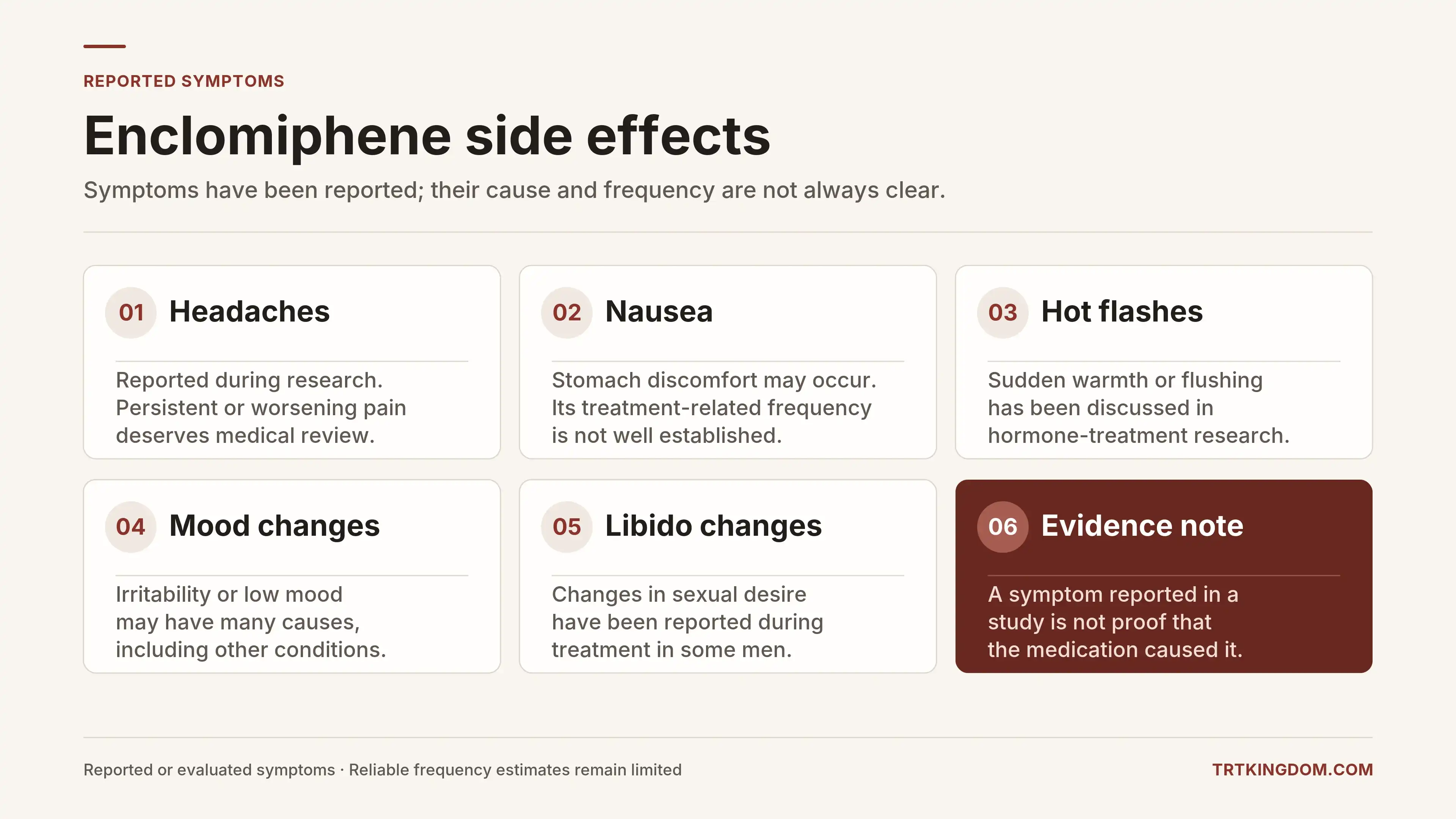
The most frequently reported side effects of enclomiphene in men are mild and typically manageable. Many men experience no side effects at all, particularly at starting doses of 12.5mg daily.
Mild Headaches
Mild headaches are among the most commonly reported side effects, particularly during the first 1 to 2 weeks of therapy. These are typically transient and resolve as the body adjusts to the hormonal changes enclomiphene produces. Most men who experience headaches find they fade within the first month of treatment.
Nausea or Gastrointestinal Discomfort
Mild nausea or stomach discomfort may occur, especially when enclomiphene is taken on an empty stomach. Taking the medication with food generally reduces or eliminates this side effect. Some men also report mild changes in appetite during the first few weeks of therapy.
Hot Flashes
Hot flashes can occur as the medication affects estrogen signaling in the brain. These are less common with enclomiphene than with clomiphene (where they are a well-documented concern) but still happen in some patients. They typically resolve within the first few weeks.
Mood Changes
Some men report mood changes during the adjustment period. These can go either direction, some men feel more alert and motivated as testosterone rises, while others experience temporary mood fluctuations as hormone levels shift. Significant or persistent mood changes should be discussed with your provider.
Changes in Libido During Adjustment
Libido changes can be temporarily inconsistent during the first few weeks as testosterone levels shift from baseline to therapeutic range. Most men ultimately experience improved libido as testosterone stabilizes at higher levels, but the transition can occasionally feel uneven.
Why Enclomiphene Has Fewer Side Effects Than Clomiphene
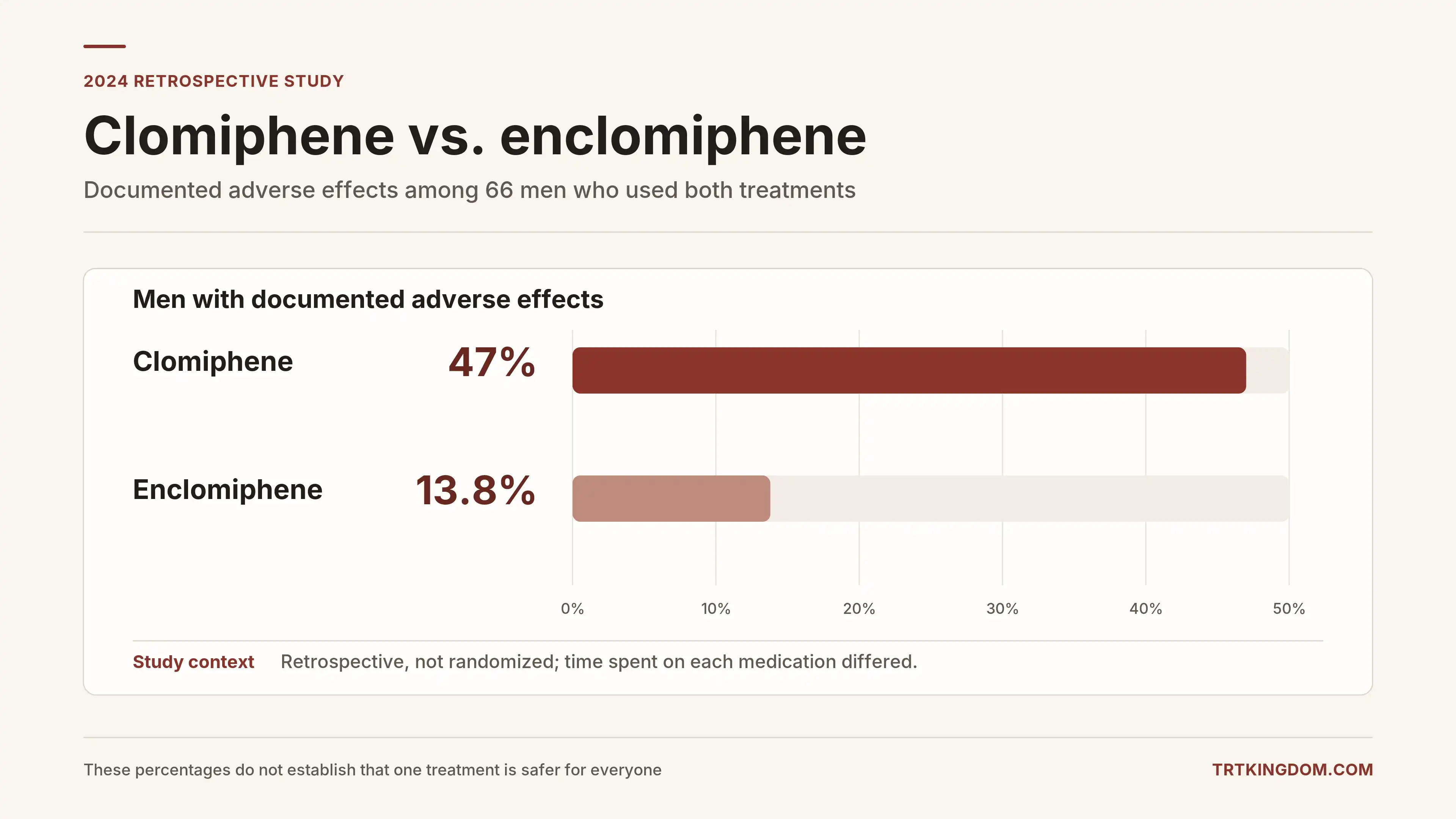
One of the key clinical advantages of enclomiphene is its significantly cleaner side effect profile compared to clomiphene. Understanding why this difference exists helps explain the clinical appeal of the newer medication.
The Zuclomiphene Problem
Clomiphene citrate is actually a mixture of two isomers: enclomiphene (the trans-isomer, which produces the beneficial testosterone-raising effects) and zuclomiphene (the cis-isomer, which is responsible for most of the problematic side effects). Zuclomiphene has partial estrogenic activity, meaning it mimics estrogen in some tissues rather than blocking it. This is the opposite of what you want when trying to raise testosterone.
Accumulation Over Time
Zuclomiphene has a very long half-life, measured in weeks. This means that with continued clomiphene use, zuclomiphene accumulates in the body. The side effects that patients experience often worsen over time as this accumulation increases. Men who tolerate clomiphene well initially sometimes develop progressive side effects weeks or months into therapy.
Enclomiphene Isolates the Beneficial Component
Enclomiphene removes zuclomiphene entirely, delivering only the trans-isomer responsible for the desired effects. This produces similar testosterone-raising results with significantly fewer side effects. The medication also has a short half-life of approximately 10 hours, meaning it clears cleanly between doses without accumulation.
The 2024 AUA Clinical Evidence
The AUA 2024 Wang et al. study provided direct clinical evidence of this difference. In 66 patients who switched from clomiphene to enclomiphene, patients reported significantly reduced rates of decreased libido (p=0.001), reduced energy (p=0.044), and mood changes (p=0.029). Overall odds of adverse events were lower with enclomiphene (p less than 0.05). The testosterone response remained similar between the two medications.
For a complete comparison of these two medications, see our full guide on enclomiphene vs clomiphene with detailed research review.
Less Common Side Effects to Watch For
Some side effects occur in a smaller percentage of patients but are important to recognize if they develop.
Elevated Estradiol
As testosterone rises on enclomiphene, some conversion to estradiol occurs through aromatization. In some men, this results in estradiol levels that climb beyond the therapeutic range. This can produce symptoms like water retention, mild breast tissue sensitivity, and mood changes. Regular estradiol monitoring catches this early, and dose adjustment or (rarely) aromatase inhibitor therapy can address it.
Visual Disturbances
Visual disturbances were a well-documented concern with clomiphene therapy, where some patients experienced blurred vision, floaters, or light sensitivity. With enclomiphene, these effects are significantly less common. However, they can still rarely occur. Any visual changes should be reported to your provider immediately, as they warrant medication reassessment.
Sleep Disturbances
Some men report changes in sleep quality during the first weeks of therapy. This may improve as hormone levels stabilize, but persistent sleep issues should be discussed with your provider. Timing adjustments (morning vs evening dosing) sometimes help.
Fatigue (Uncommon)
Although enclomiphene is intended to improve energy by raising testosterone, some patients paradoxically report fatigue, particularly during the first weeks of therapy. This usually resolves as treatment continues. Persistent fatigue despite normalized testosterone levels may indicate the dose needs adjustment or other factors should be evaluated.
Breast Tissue Sensitivity
Mild breast tissue sensitivity can occur in some men, particularly if estradiol rises more than expected. This is distinct from gynecomastia (actual tissue growth) and typically resolves with proper estradiol management through dose adjustment or protocol modification.
Allergic Reactions
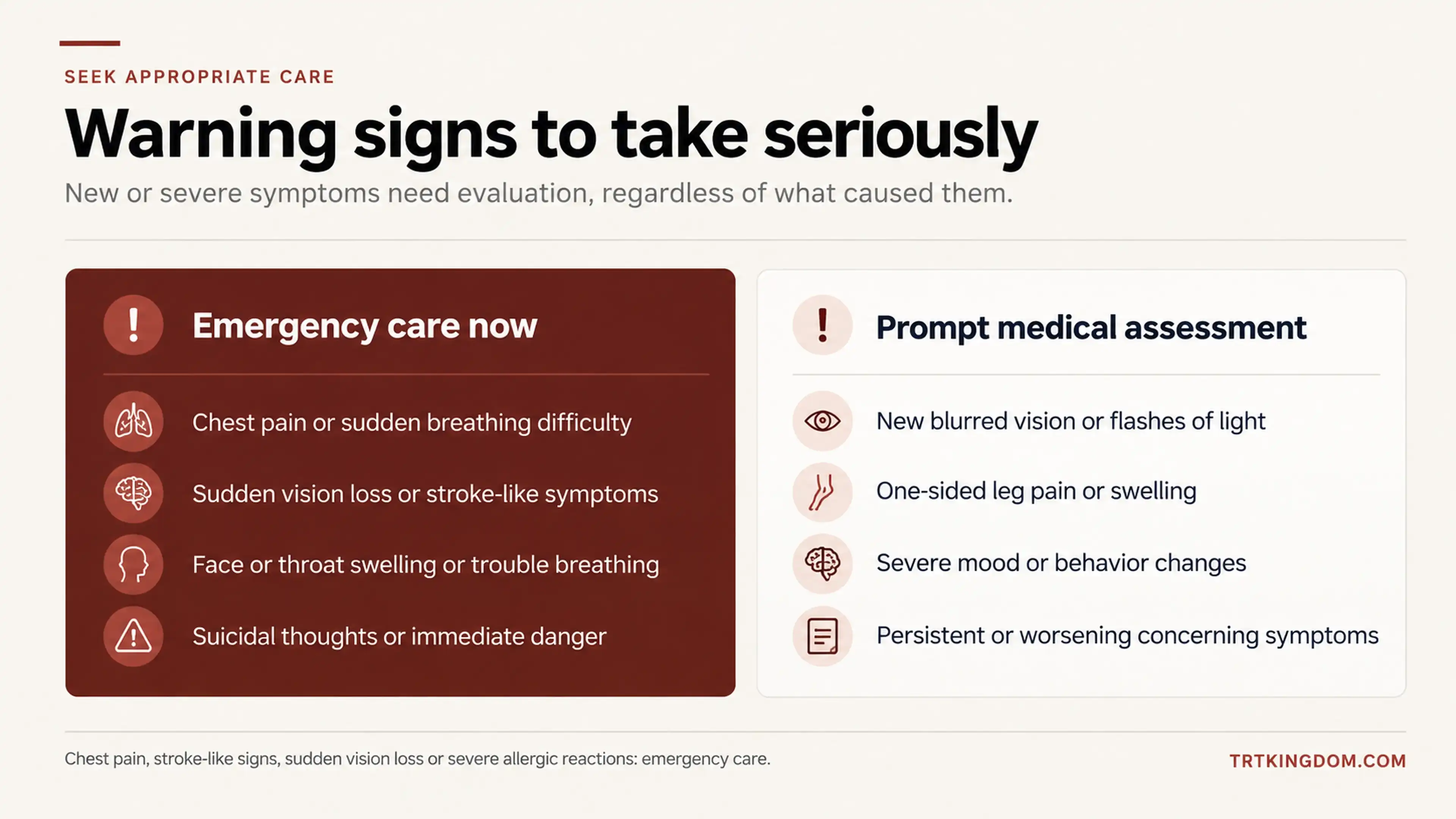
Allergic reactions to enclomiphene are rare but possible. Signs include rash, itching, difficulty breathing, or swelling of the face or throat. These warrant immediate medical attention.
Serious Side Effects That Require Medical Attention
While serious side effects are uncommon with enclomiphene, certain symptoms warrant immediate medical evaluation.
These serious effects are uncommon but important to recognize. Early intervention preserves safety and allows protocol adjustment before issues become more significant.
Side Effect Timeline: When Do They Appear?
Understanding when side effects typically appear and resolve helps you distinguish normal adjustment reactions from issues requiring intervention.
Week 1: Initial side effects most commonly include mild headaches, slight nausea, and occasional mood fluctuations. These are the body adjusting to the hormonal shifts enclomiphene is producing.
Weeks 2 to 3: Most initial adjustment side effects begin to fade. Hot flashes, if present, typically peak around this period and then diminish. New side effects at this stage are less common.
Weeks 4 to 6: The majority of men who experienced early side effects have seen them resolve. If side effects persist beyond this window, dose adjustment conversations typically happen at the follow-up appointment.
Weeks 6 to 12: Late-appearing side effects (particularly elevated estradiol-related issues) may become apparent as testosterone levels fully stabilize. Follow-up labs during this period catch these issues.
3 months and beyond: Men on long-term enclomiphene therapy typically experience minimal ongoing side effects. Any side effects that emerge later typically relate to dose issues, hormonal imbalance, or interactions with other medications.
How to Manage Enclomiphene Side Effects
Most enclomiphene side effects are manageable with simple adjustments or resolve on their own. Here are the common approaches used in clinical practice.
For Mild Headaches
Mild headaches during the first weeks typically resolve on their own. Staying well-hydrated often helps. Over-the-counter pain relievers can be used as needed, though persistent headaches warrant discussion with your provider.
For Nausea or Stomach Discomfort
Taking enclomiphene with food significantly reduces gastrointestinal side effects. If you have been taking it on an empty stomach, switching to a with-food schedule often resolves the issue entirely.
For Hot Flashes
Hot flashes typically resolve within a few weeks. Avoiding triggers (caffeine, alcohol, warm environments) during the adjustment period can help. Persistent hot flashes may indicate dose adjustment is needed.
For Mood Changes
Mild mood changes during the first weeks often reflect the normal adjustment process as hormones shift. Persistent or significant mood changes should be discussed with your provider. Options include dose reduction, timing adjustment, or in some cases, trying a different approach entirely.
For Elevated Estradiol
Elevated estradiol is managed through dose adjustment of enclomiphene itself (often reducing from 25mg to 12.5mg daily resolves it). In rare cases, aromatase inhibitors like anastrozole may be used, though this is uncommon with enclomiphene therapy.
For Visual Disturbances
Any visual changes warrant immediate medical attention. Enclomiphene is typically discontinued while the issue is evaluated. Visual effects usually resolve after stopping the medication, though they should be assessed by both your prescribing provider and potentially an ophthalmologist.
Enclomiphene Side Effects by Dose
Side effect frequency and intensity vary somewhat with dose. Understanding the dose-response relationship helps guide protocol decisions.
At 12.5mg Daily
The starting dose produces the mildest side effect profile. Many men on 12.5mg daily report no significant side effects at all. The most common issues at this dose are mild adjustment-period effects (brief headaches, minor nausea) that typically resolve within 1 to 2 weeks.
At 25mg Daily
The standard higher dose increases both effectiveness and side effect likelihood modestly. Side effects at this dose remain generally mild for most men. Side effects that occur are typically the same as at 12.5mg but somewhat more pronounced. Most men tolerate 25mg daily well.
At Doses Above 25mg Daily
Doses above 25mg daily (which are rarely clinically necessary) produce disproportionately more side effects without proportional additional benefit. The dose-response curve for therapeutic effect flattens significantly above 25mg while side effect risk continues to climb. This is why clinical practice generally caps enclomiphene at 25mg daily.
For complete information on dose selection and adjustment, see our dedicated guide on enclomiphene dosage for men [link to: /blog/enclomiphene-dosage-for-men].
When Side Effects Should Prompt a Dose Change
Not every side effect requires a dose adjustment. Understanding when to adjust versus when to wait helps you make informed decisions with your provider.
Reasons to Reduce Your Dose
- Significant mood changes affecting daily life
- Persistent headaches beyond the first 2 to 3 weeks
- Elevated estradiol beyond the therapeutic range
- Breast tissue sensitivity or growth
- Significant water retention
- Any visual disturbances (immediate consideration)
Reasons to Keep the Current Dose
- Mild adjustment-period effects in the first 1 to 2 weeks
- Good lab response with manageable side effects
- Symptoms improving but still present
- Side effects that are reducing over time
Reasons to Stop the Medication
- Significant visual disturbances
- Severe allergic reactions
- Persistent severe mood changes or depression
- Signs of serious adverse events requiring medical attention
- Failure to produce adequate response despite proper dose and duration
What Enclomiphene Does NOT Cause
Several side effects commonly attributed to anabolic steroids or testosterone therapy do not typically occur with enclomiphene. Understanding what the medication does not cause helps clarify misconceptions.
Testicular Atrophy
Unlike testosterone replacement therapy, enclomiphene does not cause testicular atrophy. In fact, it typically maintains or even increases testicular size by preserving the natural signaling pathway. This is one of the key advantages of SERM therapy over traditional TRT.
Fertility Suppression
Enclomiphene preserves and often improves fertility rather than suppressing it. The Kim et al. 2023 comparative study showed total motile sperm count can actually increase on enclomiphene therapy, making it the preferred option for men who want to maintain fertility while addressing low testosterone.
Significant Hair Loss
Enclomiphene does not typically accelerate hair loss the way exogenous testosterone sometimes does. Because the medication works by stimulating natural production rather than adding exogenous testosterone, DHT levels do not rise dramatically. Men with genetic predisposition to male pattern hair loss should still monitor, but accelerated hair loss on enclomiphene is uncommon.
Hematocrit Elevation
Elevated hematocrit (thickened blood) is a common consideration with injectable TRT but is much less common with enclomiphene. The gradual, natural rise in testosterone that enclomiphene produces generally does not stimulate the same erythropoiesis response that exogenous testosterone does.
Dependence or Withdrawal
Enclomiphene does not cause physical dependence. Stopping the medication returns the body to its pre-treatment hormonal state over a few weeks. Any treatment benefits that depended on elevated testosterone will fade, but there is no withdrawal syndrome.
Monitoring to Catch Side Effects Early
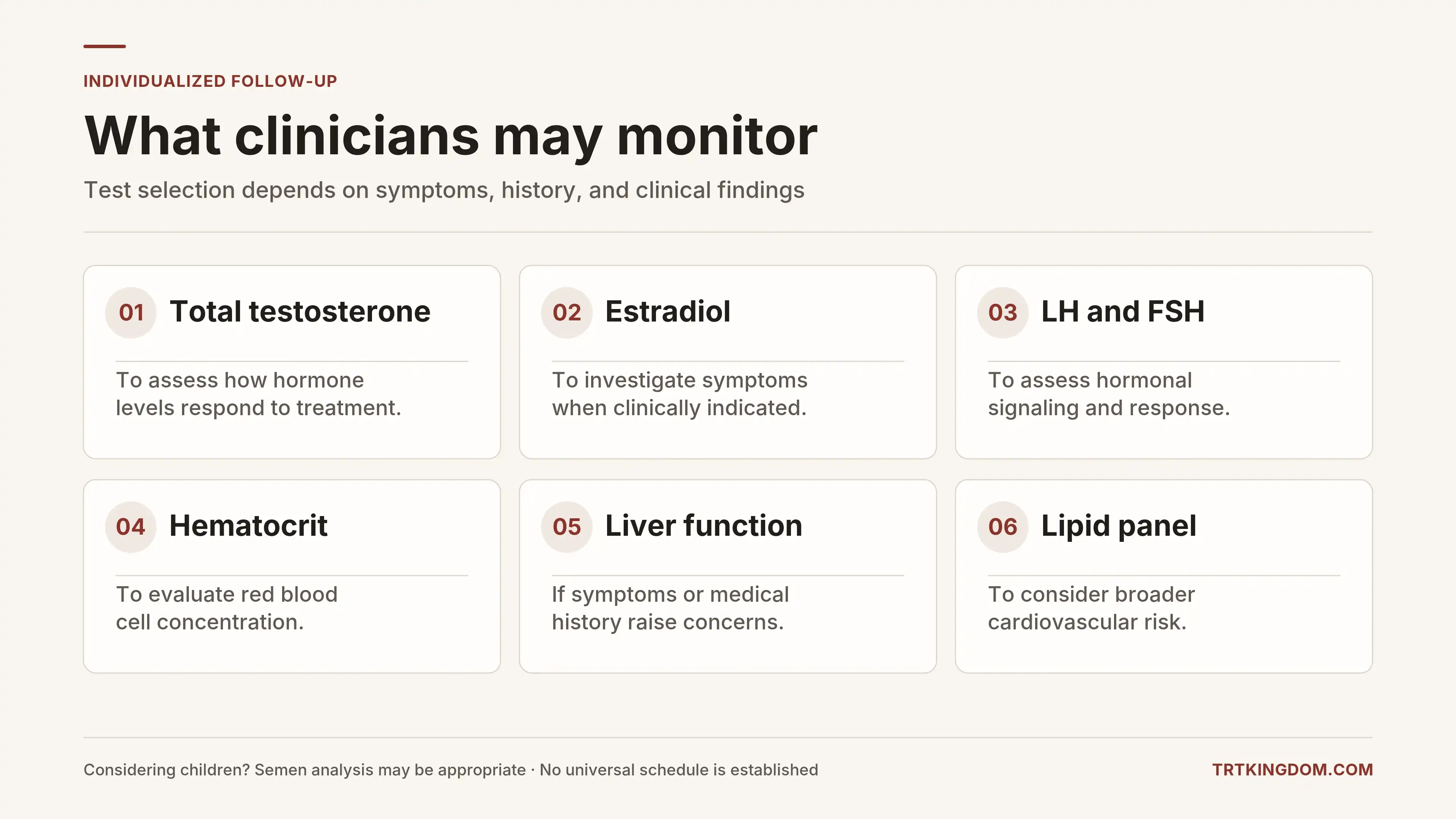
Proper monitoring catches hormonal shifts before they produce noticeable symptoms. This is why laboratory follow-up matters even when you feel fine.
What Labs Catch What Issues
- Estradiol monitoring catches early elevated estrogen before gynecomastia or water retention develop
- Testosterone monitoring confirms the dose is producing the intended effect
- LH and FSH confirm the medication is working at the pituitary level
- Liver function tests catch rare liver effects before symptoms appear
- Lipid panel catches any lipid changes early
The Standard Monitoring Schedule
Standard enclomiphene monitoring includes baseline labs before starting, follow-up at 4 to 6 weeks (which catches most emerging side effects at the biochemical level), 3-month confirmation labs, and every 6 months long-term. This schedule catches issues early enough that protocol adjustments resolve them before they become significant problems.
Patients enrolled in our medically-supervised enclomiphene program receive this complete monitoring protocol as part of the program, with lab review and provider consultation included.
Comparing Enclomiphene Side Effects to Alternatives
Context matters when evaluating enclomiphene side effects. Comparing them to alternatives helps clarify the trade-offs involved in each treatment choice.
vs Testosterone Replacement Therapy
Compared to injectable testosterone cypionate therapy, enclomiphene has a mild side effect profile overall. However, the side effects are different in nature. Testosterone injections commonly cause injection site reactions, acne, elevated hematocrit, testicular atrophy, and fertility suppression. Enclomiphene causes none of these but may produce mild headaches, occasional mood changes, and rare visual effects.
vs Clomiphene
Compared to clomiphene, enclomiphene has significantly fewer side effects while producing similar testosterone response. This is the most direct comparison because the medications work through the same mechanism. Men who tried clomiphene and experienced side effects often tolerate enclomiphene well.
vs HCG
Compared to HCG therapy, enclomiphene is a daily oral medication while HCG is a subcutaneous injection. Enclomiphene is more likely to cause mild headaches and GI effects. HCG is more likely to cause injection site reactions and may elevate estradiol more significantly. Both can be used in combination with TRT or as alternatives to injectable testosterone depending on individual goals.
vs No Treatment
For men with symptomatic low testosterone, the side effect profile of enclomiphene should be weighed against the symptoms of untreated low testosterone, which can include persistent fatigue, low libido, mood changes, muscle loss, and reduced quality of life. For most men who are good candidates for enclomiphene, the mild side effect profile is a worthwhile trade for symptom relief.
Frequently Asked Questions
What are the most common enclomiphene side effects?
The most common side effects are mild headaches, slight nausea, hot flashes, and mood changes during the first 1 to 2 weeks of therapy. These typically resolve as the body adjusts to the medication.
Does enclomiphene cause weight gain?
Enclomiphene does not typically cause weight gain. Mild water retention may occur in some patients, particularly if estradiol rises significantly. Most men experience improved body composition rather than weight gain as testosterone levels improve.
Can enclomiphene cause hair loss?
Significant hair loss is uncommon with enclomiphene. Unlike exogenous testosterone, which can accelerate male pattern baldness in genetically predisposed men, enclomiphene produces a more gradual natural rise in testosterone that does not typically trigger accelerated hair loss.
Does enclomiphene affect fertility?
Yes, but positively. Enclomiphene preserves and often improves fertility by maintaining natural LH and FSH signaling. Research shows total motile sperm count can increase on enclomiphene therapy, making it the preferred option for fertility-conscious men.
Does enclomiphene cause mood changes?
Some men experience mood changes during the first few weeks of therapy. These are typically mild and resolve as hormones stabilize. Significant or persistent mood changes should be discussed with your provider for possible dose adjustment.
Can enclomiphene cause visual disturbances?
Visual disturbances are rare with enclomiphene, significantly less common than with clomiphene. If they occur, they warrant immediate medical evaluation and typically resolve after stopping the medication.
How long do enclomiphene side effects last?
Most adjustment-period side effects (headaches, mild nausea, hot flashes, mood changes) resolve within 2 to 4 weeks as the body adapts to the medication. Side effects that persist beyond this window may warrant dose adjustment.
Is enclomiphene safe long-term?
Research supports enclomiphene as generally safe for long-term use when properly supervised. Regular monitoring catches any emerging issues early. Long-term use data is more limited than for injectable testosterone, which is why ongoing monitoring matters.
Does enclomiphene cause breast tissue growth?
Significant breast tissue growth (gynecomastia) is uncommon with enclomiphene when properly dosed and monitored. Mild breast sensitivity can occur if estradiol rises significantly, which is why regular estradiol monitoring is standard.
Can I take ibuprofen with enclomiphene?
Over-the-counter pain relievers like ibuprofen can generally be used alongside enclomiphene for headache management. Always inform your provider about all medications you take, including over-the-counter options.
Does enclomiphene cause fatigue?
Paradoxically, some men experience fatigue during the first weeks of therapy, even though the medication is intended to improve energy. This usually resolves as testosterone levels stabilize. Persistent fatigue warrants provider discussion.
Should I stop enclomiphene if I have side effects?
Not necessarily. Most mild side effects resolve within a few weeks and do not require stopping. Discuss any concerning side effects with your provider, who can determine whether dose adjustment or other changes are appropriate. Only stop the medication abruptly for serious adverse effects.
Managing Enclomiphene Therapy Effectively
Most men on enclomiphene experience only mild, transient side effects that resolve within the first few weeks of therapy. Those who do experience persistent issues typically respond well to dose adjustments or protocol modifications under physician supervision.
If you are considering enclomiphene therapy or want to discuss side effects you are experiencing with a licensed physician, you can book a free consultation with our medical team.
For men comparing enclomiphene to other options, our detailed comparisons may help clarify the choice. See enclomiphene vs testosterone injections for a complete decision framework.
References
- Wang Z, et al. Enclomiphene vs. Clomiphene: Safety and Testosterone Levels in Hypogonadal Men. Journal of Urology (AUA). 2024.
- Rodriguez KM, Pastuszak AW, Lipshultz LI. Enclomiphene citrate: A treatment that maintains fertility in men with secondary hypogonadism. Expert Review of Endocrinology & Metabolism. 2019. PubMed ID: 31063005.
- Kim ED, et al. Efficacy of Clomiphene Citrate Versus Enclomiphene Citrate for Male Infertility Treatment. 2023. PMC10404117.
- Wiehle RD, et al. Enclomiphene citrate stimulates testosterone production while preventing oligospermia: Phase II Randomized Study. BJU International. 2013.
- Bhasin S, et al. Testosterone Therapy in Men With Hypogonadism: An Endocrine Society Clinical Practice Guideline. Journal of Clinical Endocrinology & Metabolism. 2018.
- American Urological Association. Evaluation and Management of Testosterone Deficiency Guidelines. 2018, updated 2023.