TRT KINGDOM
Tirzepatide: The Complete Guide to Uses, Dosage & Benefits
Talk to a Licensed Provider Today
Key Takeaways
- Tirzepatide is a dual GIP and GLP-1 receptor agonist that supports weight loss and blood sugar management through two complementary pathways.
- FDA-approved branded versions exist for type 2 diabetes and chronic weight management.
- Compounded tirzepatide is prepared by licensed 503A pharmacies and dispensed under physician prescription when clinically appropriate. It is not FDA-approved.
- Standard titration starts at 2.5 mg weekly and increases monthly toward maintenance doses of 5 mg to 15 mg.
- Clinical trial data suggests tirzepatide may produce greater average weight loss than semaglutide at comparable time points.
- The side effect profile is similar to other GLP-1 class medications, with gastrointestinal effects most pronounced during titration.
Tirzepatide is a dual-action medication that activates both GIP (glucose-dependent insulinotropic polypeptide) and GLP-1 (glucagon-like peptide-1) receptors. That dual mechanism sets it apart from single-pathway GLP-1 medications and contributes to the significant clinical effects seen in weight management and blood sugar control. It's given as a once-weekly subcutaneous injection under physician supervision, with the dose titrated gradually over several months. FDA-approved branded products exist for specific indications, while compounded preparations are dispensed through licensed pharmacies when clinically appropriate.
What Is Tirzepatide?
Tirzepatide is a synthetic peptide and the first dual GIP and GLP-1 receptor agonist developed for diabetes and weight management. Unlike single-pathway medications that activate only GLP-1 receptors, tirzepatide activates both at once, producing a different clinical profile than earlier generations.
It was originally FDA-approved to improve blood sugar control in adults with type 2 diabetes. Later trials demonstrated substantial weight loss, leading to additional FDA approval for chronic weight management in adults with obesity or overweight with weight-related conditions.
It's prescription-only and requires evaluation by a licensed provider, who weighs your medical history, current health, treatment goals, and potential contraindications. It is not a cosmetic weight loss aid, and it isn't appropriate for every patient.
At Kingdom, compounded tirzepatide is prepared by licensed 503A pharmacies and dispensed only when a licensed physician determines treatment is clinically appropriate. Compounded preparations are not FDA-approved, and you should understand that regulatory distinction before starting.
Is Tirzepatide FDA-Approved?
Yes, in specific forms. FDA-approved tirzepatide products exist in the United States for type 2 diabetes and for chronic weight management in qualifying adults.
Compounded tirzepatide is not FDA-approved. Compounding pharmacies prepare individualized medications under state and federal regulations that differ from manufactured pharmaceutical standards, and the availability of compounded tirzepatide has been shaped by FDA shortage designations and ongoing regulatory review.
If you're prescribed compounded tirzepatide, you should know exactly what you're receiving, who compounded it, and its regulatory status. Any prescription should come from a licensed physician after an appropriate medical evaluation.
What Is Tirzepatide Used For?
Tirzepatide has established medical uses backed by clinical research. Here's when each one may apply to you.
Chronic weight management. Prescribed for adults with obesity (BMI of 30 or higher) or overweight (BMI of 27 or higher) plus at least one weight-related condition, such as high blood pressure, high cholesterol, type 2 diabetes, or obstructive sleep apnea. In clinical trials, participants combined treatment with lifestyle changes and achieved substantial average weight loss over 72 weeks.
Type 2 diabetes management. Improves blood sugar control in adults with type 2 diabetes, often alongside lifestyle changes and sometimes combined with other diabetes medications. Trials showed reductions in HbA1c and broader metabolic improvements.
Comprehensive metabolic support. Beyond weight and blood sugar, treatment often improves related markers, including blood pressure, cholesterol, and inflammation markers, when combined with lifestyle changes.
Obstructive sleep apnea in obesity. Tirzepatide has shown effectiveness in treating moderate to severe obstructive sleep apnea in adults with obesity, a newer approved area of use.
Important notice: Kingdom does not prescribe tirzepatide for cosmetic weight loss, rapid short-term results, or for patients who don't meet established clinical criteria. Treatment is considered only after an appropriate medical evaluation, and prescriptions are issued only when clinically appropriate.
Patients interested in comprehensive weight management can learn more about our medically-supervised weight loss program and how tirzepatide fits into broader treatment options.
How Does Tirzepatide Work?
Tirzepatide is unique because it activates two hormone receptor systems simultaneously. That dual action is what distinguishes it from earlier GLP-1 medications.
The GLP-1 component. Like other GLP-1 receptor agonists, tirzepatide acts in the brain, stomach, and pancreas. In the brain, it reduces appetite and increases satiety. In the stomach, it slows gastric emptying. In the pancreas, it enhances insulin release when blood sugar is elevated and reduces excessive glucagon secretion.
The GIP component. Adding GIP receptor activation is what makes tirzepatide different. GIP is another gut hormone involved in metabolism and appetite regulation, and activating it appears to complement GLP-1 effects, potentially contributing to the enhanced weight loss seen in trials versus single-pathway medications.
Combined clinical effect. The dual mechanism produces broader metabolic effects than GLP-1 alone: significant appetite reduction, improved satiety, better glucose control, and, in trials, generally greater average weight loss than semaglutide at comparable time points.
Pharmacokinetics. Tirzepatide has an extended half-life of approximately 5 days, which is why once-weekly dosing works. Steady-state blood levels build over 4 to 5 weeks of consistent dosing, and the full therapeutic effect develops gradually as titration progresses.
Interested in Medically-Supervised Weight Management?
Tirzepatide Dosage Overview
Tirzepatide dosing follows a gradual monthly titration designed to maximize tolerability. All dosing is determined and adjusted by a licensed physician based on your response, tolerance, and goals. There's no universal dose, and faster isn't better.
Standard Titration Schedule
Example schedule based on labeling. Your provider sets your actual protocol.
Why gradual titration matters. The 2.5 mg start exists to let your body adjust, not to produce clinical effect. Titrating faster dramatically increases nausea, vomiting, and other gastrointestinal side effects.
Individualized maintenance. Not every patient reaches 15 mg. Some achieve an adequate response at 5 mg, 7.5 mg, or 10 mg and stay there. Your provider adjusts based on clinical response, side effects, and goals. Never adjust your own dose. Higher doses don't produce proportionally greater benefit and significantly raise adverse event risk, including severe gastrointestinal symptoms and pancreatitis.
How to Inject Tirzepatide
Tirzepatide is a once-weekly subcutaneous injection you can self-manage at home after initial instruction from your provider or clinic staff.
Subcutaneous basics
The medication goes into the fatty tissue just below the skin. The needle is small, the injection is nearly painless, and it takes under a minute once you're familiar with the technique.
Common injection sites:
- the lower abdominal area (avoiding the area right around the belly button)
- the upper outer thigh
- the back of the upper arm.
Weekly timing
Pick one consistent day each week. The injection can be taken at any time of day, with or without food.
Site rotation
Rotate sites weekly to prevent skin irritation. Alternating abdomen and thigh in a repeating pattern provides adequate rotation.
Storage
Unused tirzepatide should be refrigerated between 36 and 46 degrees Fahrenheit. Do not freeze. After first use, storage depends on the specific preparation, so follow your dispensing pharmacy's exact instructions. If you miss a dose, follow your prescriber's guidance. Never take two doses close together to make up a missed one.
Tirzepatide Results Timeline
Tirzepatide works gradually over months. Knowing the typical timeline helps you set realistic expectations instead of quitting early.
Results Timeline at a Glance
A cleaner look at what changes, and when. Based on clinical trial timelines. Individual results vary.
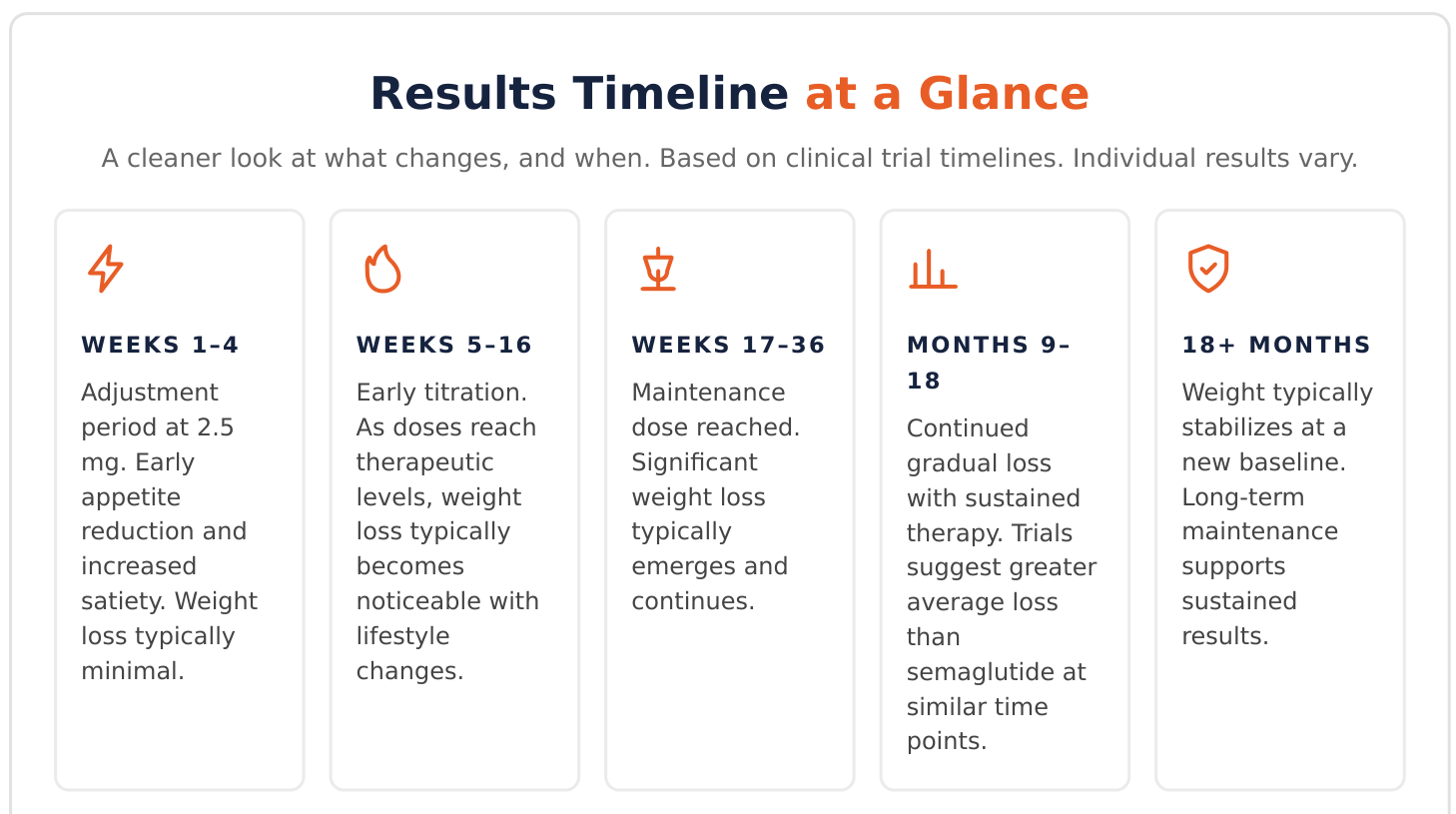
Results vary significantly based on starting weight, dose reached, lifestyle factors, and individual response. There is no guaranteed amount of weight loss.
Tirzepatide Side Effects
Tirzepatide can cause side effects. Most are gastrointestinal and most pronounced during dose escalation. Knowing what to expect helps you and your provider manage them.
Common Side Effects
- nausea (the most common, typically worst during dose increases)
- Vomiting
- Diarrhea
- Constipation
- decreased appetite (usually intended)
- abdominal pain or discomfort
- indigestion or acid reflux
- fatigue, particularly early in treatment.
Less Common Side Effects
- injection site reactions
- burping
- bloating and gas
- mild hair thinning during significant weight loss
- changes in taste
- dizziness.
Serious Side Effects: Seek Medical Care For
- severe abdominal pain (especially radiating to the back, possible pancreatitis)
- persistent severe vomiting or inability to keep fluids down
- signs of gallbladder issues (upper right abdominal pain, yellowing skin, fever)
- a severe allergic reaction
- signs of low blood sugar when combined with diabetes medications
- vision changes, particularly with type 2 diabetes
Boxed warning: thyroid C-cell tumors. The FDA label for branded tirzepatide carries a boxed warning about thyroid C-cell tumors observed in rodent studies. It's unknown whether tirzepatide causes these tumors, including medullary thyroid carcinoma (MTC), in humans. The medication is contraindicated in patients with a personal or family history of MTC or multiple endocrine neoplasia syndrome type 2 (MEN 2).
Managing GI side effects
Nausea is the main reason some patients stop early. Strategies that often help: smaller, more frequent meals; avoiding greasy or spicy foods during escalation; staying hydrated; and timing the injection in the evening if nausea disrupts your day. Severe or persistent nausea should be discussed with your provider for possible dose adjustment.
Warnings and Contraindications
Tirzepatide isn't appropriate for everyone.
Do not use if you have:
- a personal or family history of medullary thyroid carcinoma (MTC)
- multiple endocrine neoplasia syndrome type 2 (MEN 2)
- a known hypersensitivity to tirzepatide or any formulation component
- type 1 diabetes (tirzepatide is not indicated for it).
It's also not recommended during pregnancy and should be discontinued before planned conception. Diabetic ketoacidosis is another exclusion.
Use with caution if you have:
- a history of pancreatitis
- gallbladder disease
- kidney disease
- diabetic retinopathy
- severe gastrointestinal disease including gastroparesis
- mood disorders
- history of suicidal ideation, or eating disorders.
Drug interactions
Tirzepatide delays gastric emptying, which affects absorption of oral medications. Tell your provider about everything you take, especially insulin and other diabetes medications (hypoglycemia risk), oral contraceptives (effectiveness may be reduced during initiation and dose escalation), and any medication that requires precise absorption timing.
Tirzepatide vs. Other Weight Management Options
Several options exist, and each works differently:
- Tirzepatide: once-weekly injection, dual GIP and GLP-1 agonist, extensive clinical data suggesting strong weight loss effects.
- Semaglutide: once-weekly injection, GLP-1 only, longer clinical use history and extensive supporting research.
- Phentermine: oral appetite suppressant, typically short-term use, different mechanism from the GLP-1 class.
- Bariatric surgery: produces larger weight loss but involves permanent anatomical changes and higher risks. Typically considered for BMI 35+ with complications or BMI 40+.
The right option depends on your medical history, weight-related conditions, goals, and personal preference. A physician helps determine which approach fits your situation.
Monitoring Requirements on Tirzepatide
Proper monitoring keeps treatment safe and effective. Working with a licensed provider who orders the right labs is essential.
Baseline labs (before starting):
Before prescribing HCG, a licensed provider will typically check HbA1c, fasting glucose, comprehensive metabolic panel including liver and kidney function, lipid panel, thyroid function markers, complete blood count, and a pregnancy test for women of childbearing potential.
Follow-up schedule:
- monthly check-ins during titration to review tolerance, side effects, and response;
- repeat relevant labs about 3 months after reaching a maintenance dose;
- then a full lab panel plus weight, blood pressure, and symptom review every 6 months long-term.
Weight and metabolic tracking:
Consistent tracking reveals response patterns. Many patients see initial rapid loss followed by plateaus, which respond to dose adjustments or lifestyle changes discussed with the provider.
Start Your Tirzepatide Consultation Today
Tirzepatide Cost and Insurance
Cost varies significantly by source, coverage, and preparation:
- Branded tirzepatide (FDA-approved products): retail typically runs $1,000 to $1,350 per month without insurance. Coverage varies widely and often requires prior authorization with documented medical necessity.
- Compounded tirzepatide: typically $299 to $599 per month through telehealth programs.
- Telehealth program pricing: comprehensive programs usually bundle medication, consultation, labs, and monitoring into one monthly fee, commonly $349 to $649 depending on the program.
Insurance coverage is complicated. Some plans cover branded tirzepatide for diabetes but not for weight loss alone, and compounded tirzepatide is rarely covered. HSA and FSA accounts typically allow tirzepatide payments when prescribed for a legitimate medical need.
How to Get Tirzepatide Prescribed Online
Getting a prescription through a licensed telehealth clinic follows a standardized medical evaluation:
1. Health intake questionnaire. Cover your medical history, current medications, weight history, weight-related conditions, and treatment goals.
2. Blood work. Lab testing including blood sugar markers, kidney and liver function, lipids, and other relevant labs confirms whether tirzepatide is medically appropriate.
3. Telehealth consultation. A licensed physician reviews your intake, labs, and goals via video.
4. Prescription decision. If tirzepatide is clinically appropriate, a prescription is issued. If not, the provider explains why and discusses alternatives.
5. Medication delivery. Your prescription goes to a licensed pharmacy and ships directly to your home.
6. Ongoing monitoring. Regular follow-ups and lab work keep treatment optimized and safe, with dose adjustments based on response and tolerance.
Important: prescriptions are issued only when clinically appropriate and after a legitimate medical evaluation. Kingdom does not prescribe tirzepatide for cosmetic weight loss, for patients who don't meet clinical criteria, or for rapid short-term results.
Patients ready to explore tirzepatide therapy can start with our physician-supervised weight loss program or book a free provider consultation.
Brand Names and Formulations
Branded tirzepatide products available in the U.S. include Mounjaro (FDA-approved for type 2 diabetes) and Zepbound (FDA-approved for chronic weight management), alongside compounded tirzepatide prepared by 503A pharmacies. All contain the same active ingredient but may differ in concentration, formulation ingredients, and preservatives. The product you receive should be clearly labeled, and you should understand exactly what you're getting.
Frequently Asked Questions
Is tirzepatide the same as Mounjaro?
Tirzepatide is the active ingredient in branded products including Mounjaro and Zepbound. Compounded tirzepatide contains the same active ingredient but is prepared by compounding pharmacies rather than the brand manufacturer.
Tirzepatide vs. semaglutide: which is better?
Both produce meaningful weight loss. Clinical trial data suggests tirzepatide may produce greater average weight loss than semaglutide at comparable time points, but individual response varies. The best choice depends on your medical history and goals, discussed with your provider.
How much weight will I lose on tirzepatide?
Clinical trials show substantial average weight loss over 72 weeks, but individual results vary based on starting weight, dose reached, lifestyle, and individual response. There's no guaranteed amount.
How long does tirzepatide take to work?
Appetite reduction often begins within the first few weeks. Meaningful weight loss typically becomes apparent during titration (weeks 5 to 16), and full therapeutic effect emerges after reaching a maintenance dose.
What happens when I stop tirzepatide?
Appetite typically returns to pre-treatment levels within weeks of stopping, and many patients regain some weight after discontinuation. That's why long-term maintenance protocols are common for sustained results.
Can tirzepatide cause pancreatitis?
Pancreatitis is a serious potential side effect. Any severe abdominal pain, particularly radiating to the back, warrants immediate medical evaluation. Use with caution if you have a history of pancreatitis.
How much does tirzepatide cost per month?
Branded tirzepatide retails for roughly $1,000 to $1,350 per month without insurance. Compounded tirzepatide typically costs $299 to $599 per month through telehealth programs.
Does insurance cover tirzepatide?
Coverage varies widely. Insurance may cover branded tirzepatide for diabetes but often not for weight loss alone. Compounded tirzepatide is rarely covered. HSA and FSA can typically be used.
Can I buy tirzepatide online?
Tirzepatide requires a valid prescription from a licensed physician. It can be prescribed through telehealth after a proper medical evaluation and delivered from a licensed pharmacy.
Is compounded tirzepatide safe?
Compounded tirzepatide prepared by licensed 503A pharmacies under physician prescription is subject to pharmacy compounding standards, though not FDA premarket review. Quality and preparation methods vary between pharmacies, so understanding what you're receiving matters.
What is the maximum tirzepatide dose?
The maximum maintenance dose is 15 mg weekly. Some patients do well at lower maintenance doses (5 mg, 7.5 mg, 10 mg, or 12.5 mg weekly) based on individual response and tolerance.
Can tirzepatide be used during pregnancy?
No. Tirzepatide is not recommended during pregnancy and should typically be discontinued before planned conception. Women of childbearing potential should discuss contraception with their provider during treatment.
Get Started With Provider-Supervised Tirzepatide



Dr. Daniel Olivero